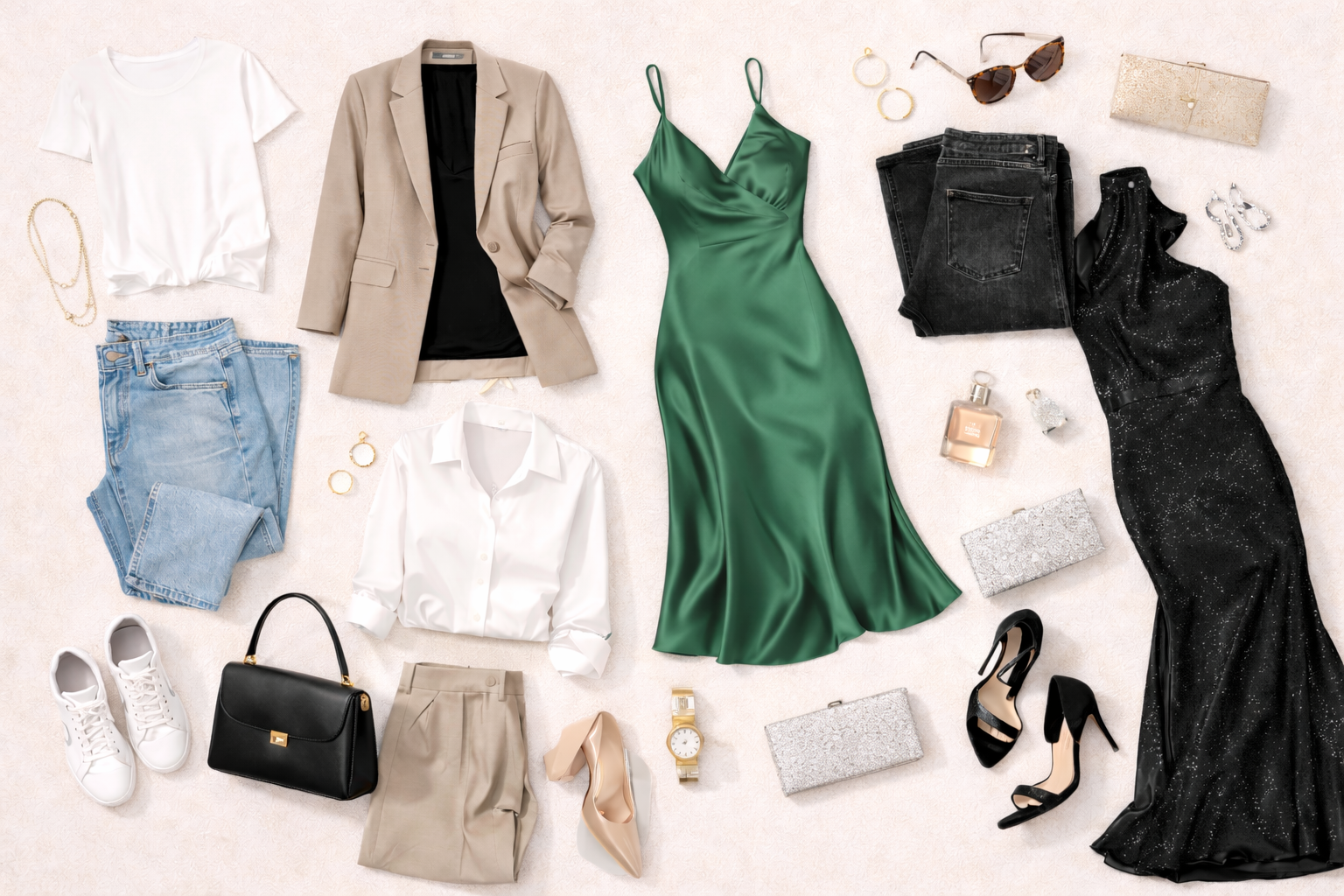
If you’ve ever Googled “What does cocktail attire actually mean for women?” five minutes before leaving the house – welcome. You’re in the right place.
Women’s dress codes can feel unnecessarily vague. Invitations say smart casual, semi-formal, or black tie optional… but they rarely explain what that actually means in real-life outfit terms.
Is a midi dress enough?
Are jeans acceptable?
Do you need a clutch?
Should your hair be up?
This complete guide to women’s dress codes breaks everything down in detail – including:
- What each dress code really means
- Suggested outfit formulas
- What clothing items to wear (and avoid)
- Hairstyles that complement each level of formality
- Accessories that elevate without overpowering
- Real examples of events, occasions, and venues
- How to decode an invitation quickly and confidently
By the end, you won’t just understand dress codes – you’ll feel fluent in them.
Casual Dress Code for Women
What Casual Means
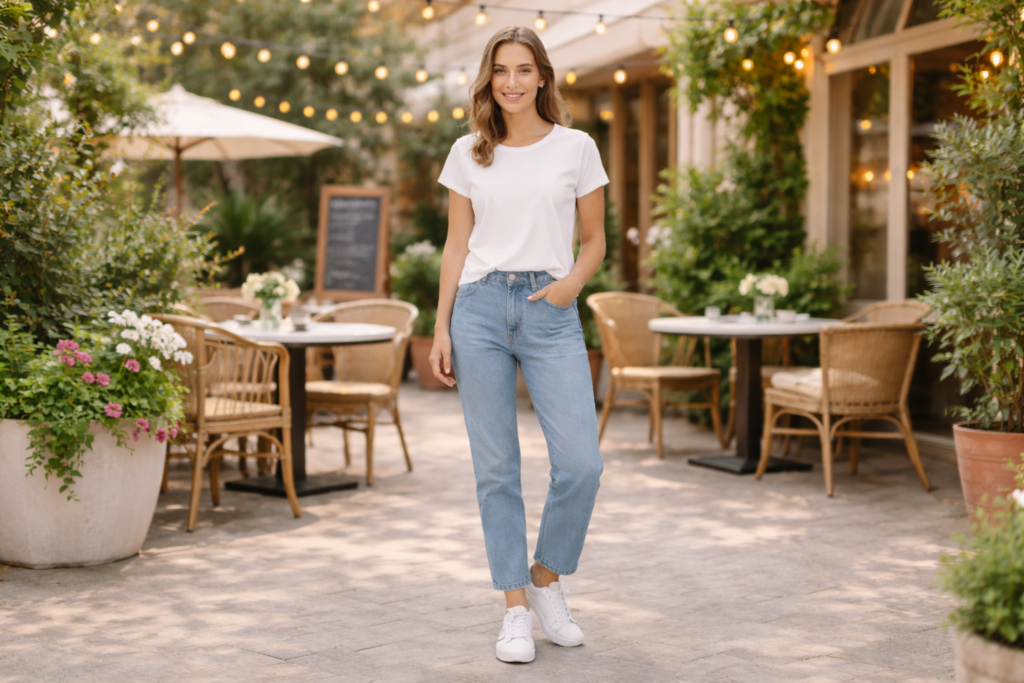
Casual dress code is relaxed, comfortable, and effortless – but still intentional. This is polished everyday wear, not pyjamas or gym clothes.
It’s about looking like you tried… without looking like you tried too hard.
Suggested Outfit Formula
Elevated basics + relaxed silhouette + everyday footwear + minimal jewellery
Examples:
- Straight-leg jeans + fitted knit top + white sneakers
- Casual midi dress + flat sandals + crossbody bag
- Tailored trousers + tucked-in tee + loafers
The key is balance. If one piece is relaxed, balance it with one structured element.
Accessories That Work
- Small gold hoops or studs
- Simple layered necklaces
- Canvas tote or crossbody bag
- Classic sunglasses
- Delicate watch
Avoid overly formal evening bags or heavy statement jewellery.
Hairstyles That Complement Casual
- Low messy bun
- Natural waves
- Claw clip twist
- Sleek low ponytail
Keep hair texture natural and soft.
Where Casual May Apply
- Brunch at cafés
- Coffee dates
- Backyard birthday parties
- Casual baby showers
- Shopping days
- Outdoor markets
Energy: Relaxed and social
Smart Casual Dress Code
What Smart Casual Means
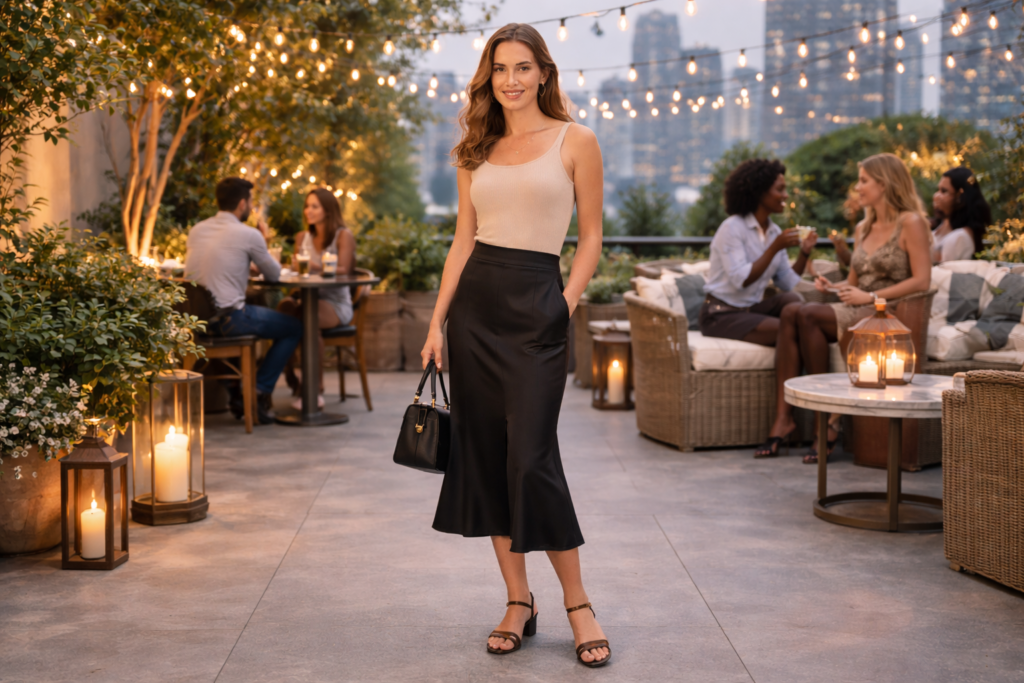
Smart casual bridges relaxed and refined. It’s polished without feeling corporate.
It’s one of the most commonly misunderstood women’s dress codes because it varies slightly depending on the venue, and can signal different levels of polish based on setting, time of day, and overall polish.
Suggested Outfit Formula
One tailored or structured piece + refined basics + polished shoes + intentional accessories
Examples:
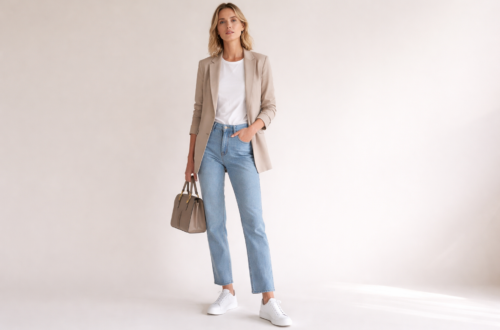
- Blazer + straight jeans + loafers
- Midi skirt + knit top + ankle boots
- Tailored trousers + silk blouse
Denim is acceptable, but keep it clean and non-distressed.
Accessories That Work
- Structured shoulder bag
- Pearl or gold studs
- Slim belt
- Minimal bracelet stack
Avoid flip-flops, oversized totes, or athletic sneakers.
Hairstyles That Complement Smart Casual
- Soft blowout
- Sleek low pony
- Polished straight hair
- Half-up style
The hair should look styled – not rushed.
Where Smart Casual May Apply
- Dinner at mid-range restaurants
- Rooftop bars
- Gallery openings
- Engagement parties
- Business lunches
Energy: Social and polished.
Business Casual Dress Code
What Business Casual Means
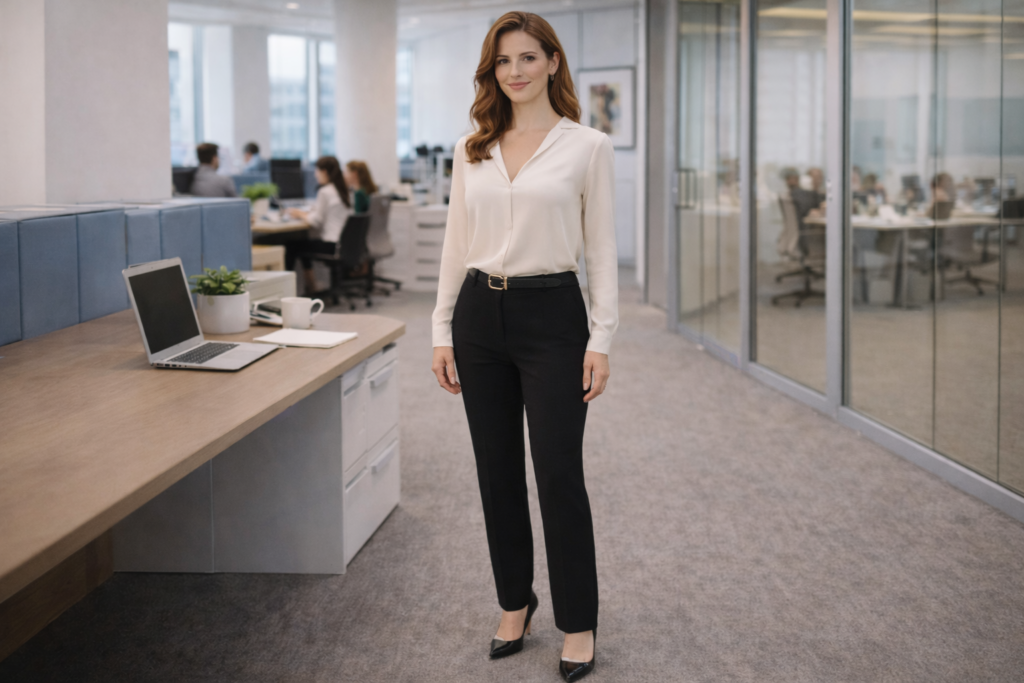
Business casual is professional but approachable. It’s the most common corporate dress code.
It prioritises polish, modesty, and clean lines.
Suggested Outfit Formula
Tailored base + modest top + structured bag + professional footwear
Examples:
- Tailored trousers + blouse + loafers
- Midi skirt + knit top + low heels
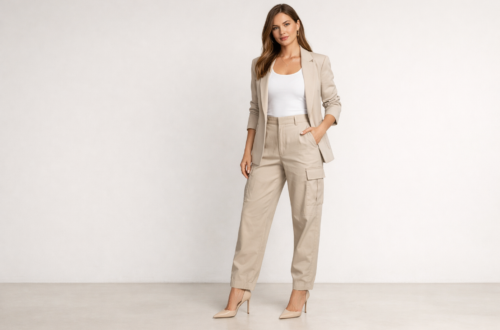
- Blazer + ankle trousers + flats
Accessories That Work
- Structured leather tote
- Stud earrings
- Simple watch
- Thin belt
Avoid loud statement jewellery or overly trendy pieces.
Hairstyles That Complement Business Casual
- Sleek low bun
- Straight hair tucked behind ears
- Clean low ponytail
- Smooth shoulder-length blowout
Keep hair neat and away from the face.
Where Business Casual May Apply
- Corporate offices
- Client meetings
- Conferences
- Professional networking events
Energy: Professional and approachable.

Business Formal Dress Code
What Business Formal Means
Business formal is structured, authoritative, and conservative. It is common in industries like finance, law, and executive corporate environments.
This dress code prioritises credibility and professionalism above trend.
Suggested Outfit Formula
Matching suit or structured dress + closed-toe heels + refined jewellery
Examples:
- Tailored suit set
- Sheath dress + blazer
- Structured midi dress
Choose neutral tones and high-quality fabrics.
Accessories That Work
- Structured top-handle bag
- Pearl or diamond studs
- Subtle luxury watch
Avoid bright prints, sneakers, or deep necklines.
Hairstyles That Complement Business Formal
- Chignon
- Sleek tight bun
- Ultra-polished blowout
Hair should look intentional and refined.
Where Business Formal May Apply
- Boardroom presentations
- Executive meetings
- Corporate interviews (finance or law)
- High-stakes client pitches
Energy: Authority and control.
Cocktail Dress Code
What Cocktail Attire Means
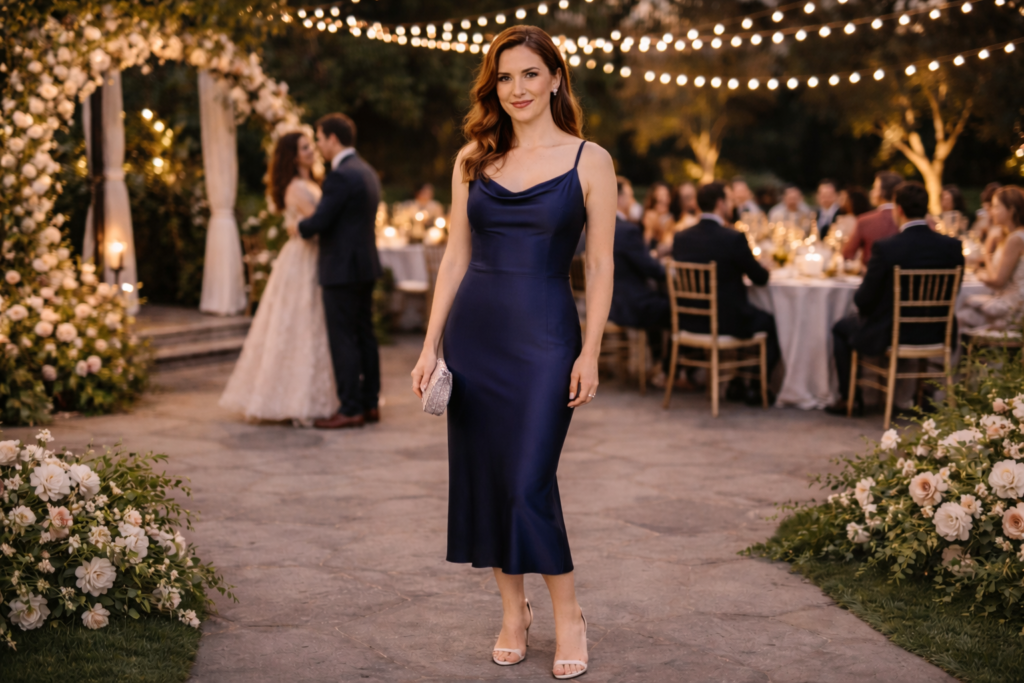
Cocktail attire is dressy, celebratory, and evening-focused – but not full gala glamour.
It’s one of the most common wedding dress code.
Suggested Outfit Formula
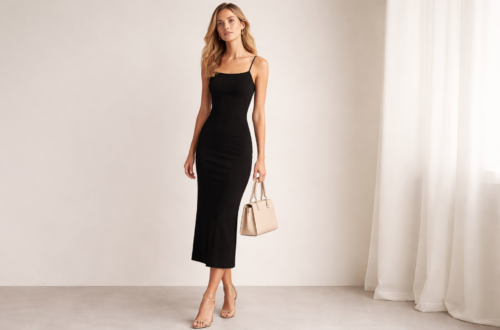
Knee-length or midi dress + heels + clutch + statement earrings
Examples:
- Satin midi dress
- Structured mini (appropriate length)
- Elegant jumpsuit
Choose elevated fabrics like silk, satin, chiffon, or crepe.
Accessories That Work
- Metallic or satin clutch
- Statement earring
- Strappy heels
Avoid oversized handbags or sneakers.
Hairstyles That Complement Cocktail
- Soft curls
- Hollywood waves
- Textured updo
Where Cocktail May Apply
- Evening weddings
- Holiday parties
- Birthday celebrations
- Hotel receptions
Energy: Elevated and festive.
Semi-Formal Dress Code
What Semi-Formal Really Means
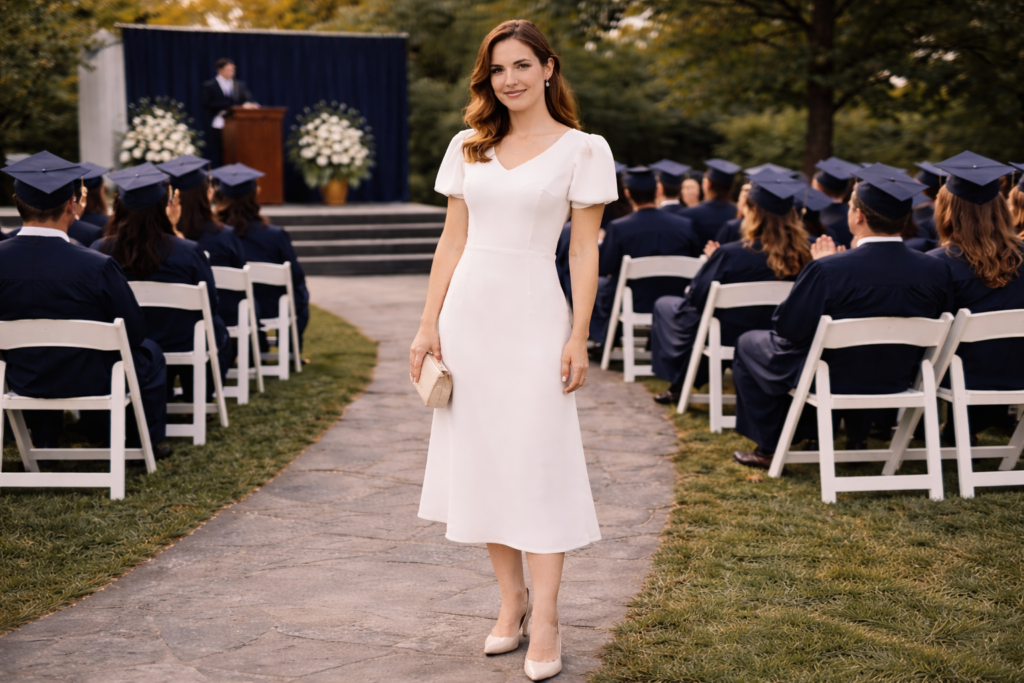
Semi-formal is elegant but slightly softer than cocktail. It’s often worn at afternoon weddings or formal daytime events.
Suggested Outfit Formula
Refined midi or maxi dress + polished heels + delicate jewellery
Examples:
- Flowing midi dress
- Elegant maxi dress
- Dressy co-ord set
Accessories That Work
- Pearl earrings
- Small embellished clutch
- Strappy heels
Hairstyles That Complement Semi-Formal
- Romantic waves
- Elegant low bun
- Soft half-up curls
Where Semi-Formal Applies
- Afternoon weddings
- Graduation ceremonies
- Religious celebrations
- Milestone birthday events
Energy: Graceful and polished.
Formal / Black Tie Optional
What Formal Means
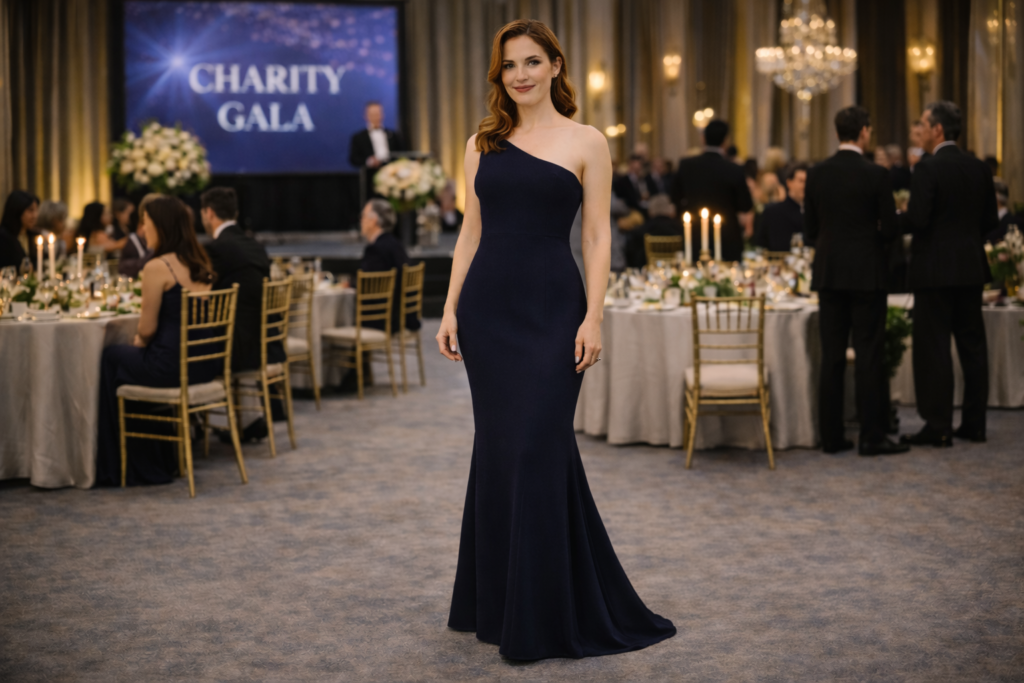
Upscale evening elegance. Long dresses common but not mandatory.
Suggested Outfit Formula
Floor-length gown or luxe midi + refined heels + clutch
Examples:
- Satin or chiffon gown
- Structured formal midi
- Elegant evening jumpsuit
Accessories That Work
- Crystal or satin clutch
- Diamond drop earrings
- Tennis bracelet
Hairstyles That Complement Formal
- Sleek updo
- Sculpted curls
- Polished side part
Where Formal Applies
- Formal weddings
- Charity galas
- Opera or theatre premieres
- Awards nights
Energy: Elevated and sophisticated.
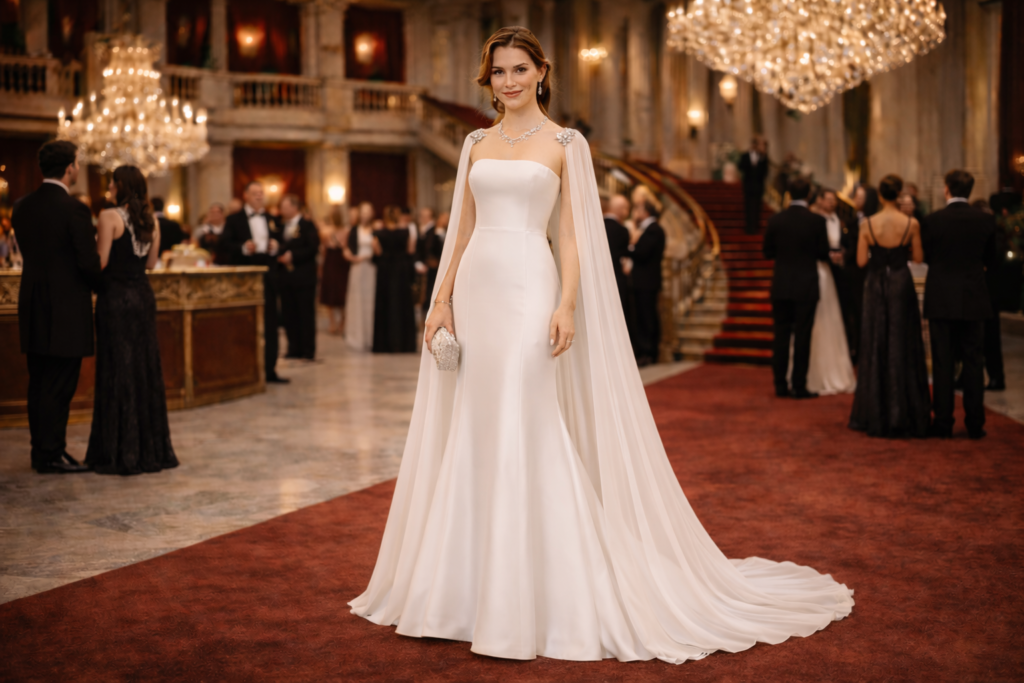
Black Tie
What Black Tie Means
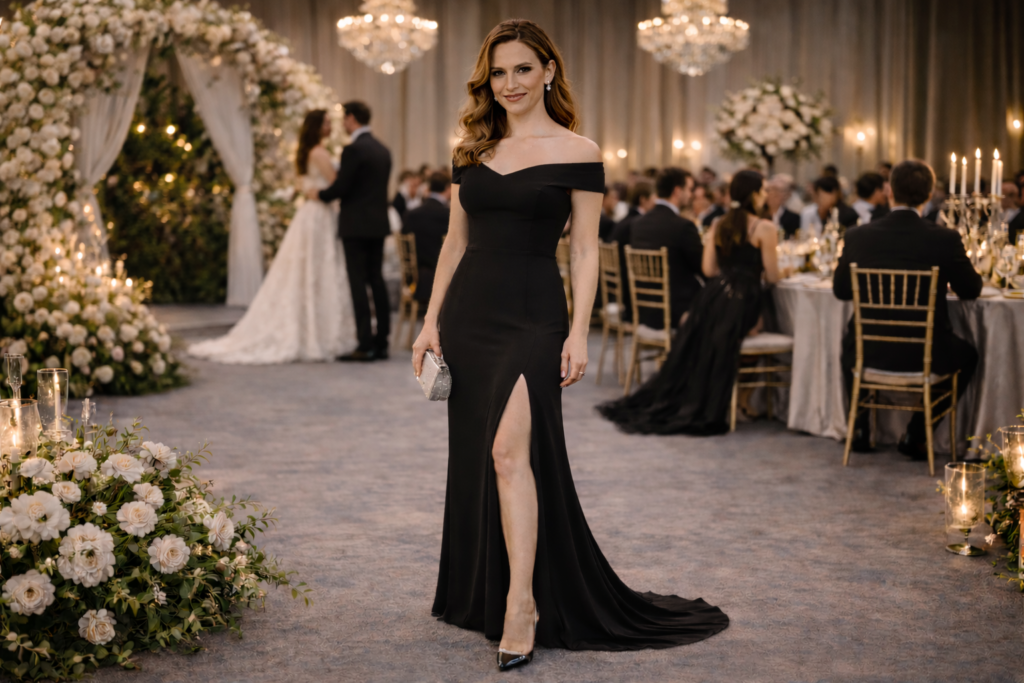
Full evening glamour.
Suggested Outfit Formula
Floor-length gown + formal heels + elegant clutch
Accessories That Work
- Fine statement earrings
- Diamond bracelet
- Structured evening clutch
Hairstyles That Complement Black Tie
- Formal chignon
- Hollywood waves
- Sculpted bun
Where Black Tie Applies
- Charity galas
- Award ceremonies
- Luxury weddings
- Five-star hotel events
Energy: Red carpet polish.
White Tie
What White Tie Means
The most formal dress code.
Suggested Outfit Formula
Full-length formal gown + formal gloves (optional) + fine jewellery
Accessories That Work
- Opera-length gloves
- Diamond necklace
- Elegant drop earrings
Hairstyles That Complement White Tie
- Classic updo
- Regal chignon
Where White Tie Applies
- State dinners
- Royal events
- Diplomatic galas
- Historic opera houses
Energy: Traditional, regal, timeless.
How to Decode an Invitation Quickly
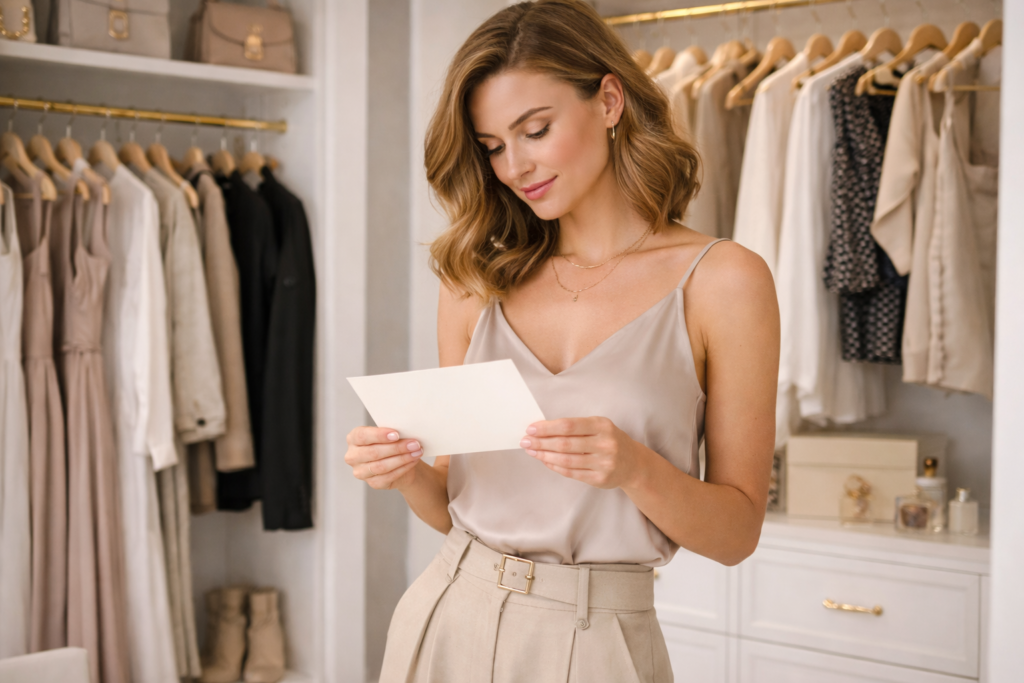
Sometimes the dress code isn’t even listed. Instead, you’re left decoding subtle clues. Here’s how to interpret them confidently.
1. Start With the Time
Before 12pm → Casual to semi-formal
Think lighter fabrics, softer silhouettes, and less shine.
12pm-5pm → Semi-formal or cocktail (lighter styling)
Afternoon events lean polished but not dramatic. Even if the invitation says “formal,” daytime formal is different from evening formal.
After 6pm → Cocktail, formal, or black tie
Once the sun sets, the dress code almost always elevates.
Shine, deeper colours, structured silhouettes, and stronger makeup become appropriate.
2. Analyse the Venue
The location tells you more than the wording sometimes does.
Backyard or Private Home → Casual or smart casual
Trendy Restaurant or Rooftop bar → Smart casual or cocktail
Hotel ballroom or Estate Venue → Cocktail or formal
Corporate office → Business attire
Opera house or mansion → Black tie
3. Consider the Host & Industry
Context always matters.
Finance or law → Lean conservative
Creative industry → Slight flexibility
Luxury brand event → Elevate your look
4. Read Between the Lines
Certain phrases hint at the dress code without stating it directly.
- “Join us for cocktails” → Cocktail attire
- “Formal reception to follow” → Formal or black tie optional
- “Garden celebration” → Semi-formal or elevated smart casual
- “Black tie preferred” → Wear a gown
- “Festive attire” → Cocktail with personality
If it says:
- Black tie optional → You can wear a formal midi or full-length gown
- Formal requested → Lean long
- Dress to impress → Cocktail minimum
If nothing is listed?
Default to smart casual for daytime, cocktail for evening.
5. When in Doubt, Elevate
It’s easier to soften an elevated outfit than to recover from being underdressed.
When in doubt:
- Add structure
- Choose refined accessories
- Keep hair polished
- Carry a clutch in the evening
6. Match the Energy of the Event
Match the structure of your outfit to the structure of the event.
Casual event → relaxed silhouette
Structured venue → structured outfit
Grand venue → elevated styling
Professional setting → refined minimalism
When your environment and your outfit feel aligned, you’ll never feel out of place.
Final Thoughts
Understanding women’s dress codes isn’t about restriction – it’s about alignment.
When your outfit reflects the setting, the time of day, and the energy of the venue, you don’t just look appropriate – you feel at ease. There’s a quiet confidence that comes from knowing you belong in the room.
But dressing appropriately isn’t only about personal comfort. It’s also a gesture of respect – to the hosts who planned the event, to the occasion being celebrated, and to the space that’s welcoming you. A dress code exists for a reason: it sets the tone, honours the atmosphere, and creates a shared sense of occasion.
The real secret?
Match the structure of your outfit to the structure of the event. The more formal the setting, the more intentional and refined your choices should be.
And if you’re ever unsure – lean slightly elevated rather than underdone. Polish your accessories, refine your silhouette, and let your presence carry the rest.
Because when you dress in harmony with the moment, confidence doesn’t need to be forced – it naturally follows.
Leave a Reply