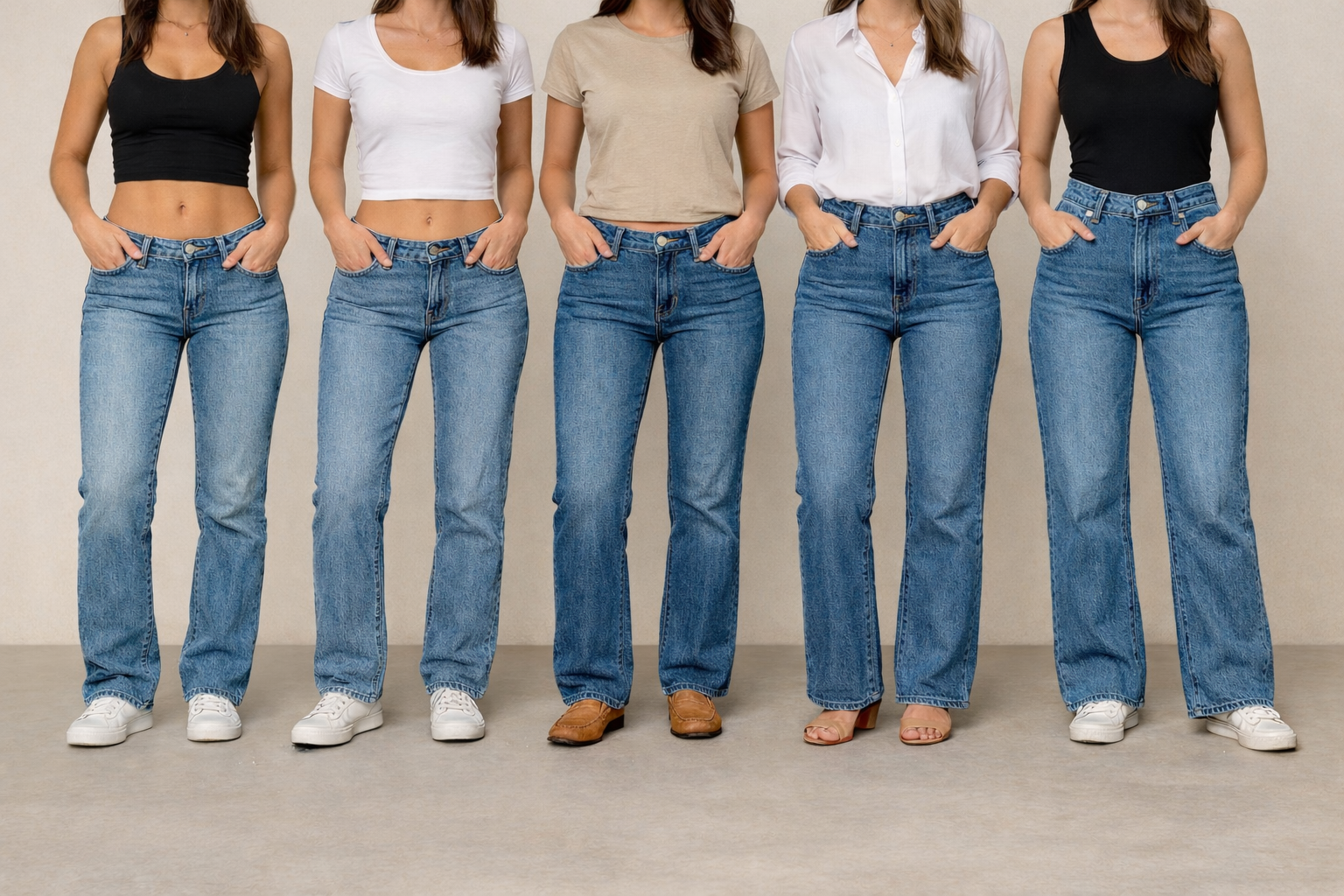
Previously, we explored the most popular pant cuts – now it’s time to talk about their partner in crime when it comes to jeans: the rise.
When it comes to finding the perfect pair of jeans, the rise matters just as much as the cut. You can love the wash, adore the leg shape, and still feel “off” – simply because the rise isn’t right for your body proportions.
If you’ve ever wondered:
- What is the difference between low-rise and mid-rise jeans?
- Are high-rise jeans more flattering?
- Which jean rise is best for my body type?
- What rise should I choose for a capsule wardrobe?
This guide breaks down every type of jean rise, how each one fits, who it flatters most, and how to style it in a modern way for 2026.
What Does “Jean Rise” Mean?
Jean rise refers to the measurement from the crotch seam to the top of the waistband. It determines where the jeans sit on your waist or hips.
Even a one-inch difference can completely change:
- How long your legs appear
- How defined your waist looks
- Your comfort level when sitting
- The overall aesthetic of your outfit
Understanding jean rises is key to building flattering, wearable outfits – especially if you’re curating a capsule wardrobe.
1. Ultra Low-Rise Jeans
Rise measurement: Approx. 6–7 inches (15-18 cm)
Where they sit: On the hips, well below the belly button
Aesthetic:
Y2K revival, early 2000s nostalgia, trend-driven styling.
Ultra low-rise jeans sit very low on the hips and often expose the lower stomach. They were iconic in early 2000s fashion and are re-emerging with looser, baggier silhouettes.
Who They Flatter:
- Straight or rectangle body types
- Short torsos (can visually lengthen the upper body)
- Those comfortable showing midriff
Styling Tips:
- Pair with slightly fitted or cropped tops to avoid looking disproportionate
- Opt for a relaxed fit to avoid it digging in to your hips, especially since ultra low-rise can draw extra attention to the waist band
- Take precaution choosing the cut – relaxed straight-leg, baggy or subtle flare seem to work best
As someone who usually gravitates toward the opposite end of the spectrum, ultra low-rise jeans can feel like a tough pill to swallow. But their strong connection to the Y2K revival makes them hard to ignore – and styled thoughtfully with the right pieces, they can feel surprisingly modern.
2. Low-Rise Jeans

Rise measurement: Around 8 inches (21 cm)
Where they sit: 1–2 inches (2-5 cm) below the belly button
Low-rise jeans offer slightly more coverage than ultra low-rise but still sit below the natural waistline.
Aesthetic:
Casual, cool-girl, trend-forward.
This updated version feels less “2003 pop star” and more effortless street style.
Who They Flatter:
- Short torsos
- Athletic or rectangle shapes
- Those wanting to lengthen their upper body proportionally
Styling Tips:
- Similar to ultra low-rise jeans, the silhouette is balanced with fitted (but not skin-tight) tops
- Add an oversized blazer or cropped leather jacket to elevate the look
- Seems to work best in relaxed straight-leg, slightly baggy, or soft wide-leg cuts
Personally, because low-rise jeans offer minimal stomach support, they’re not a style I reach for often. If comfort is a priority for you as well, a mid- or high-rise fit may feel more secure and flattering. That said, this cut pairs beautifully with many of the slightly cropped tops trending right now, making it a strong option for a more fashion-forward look.
3. Mid-Rise Jeans
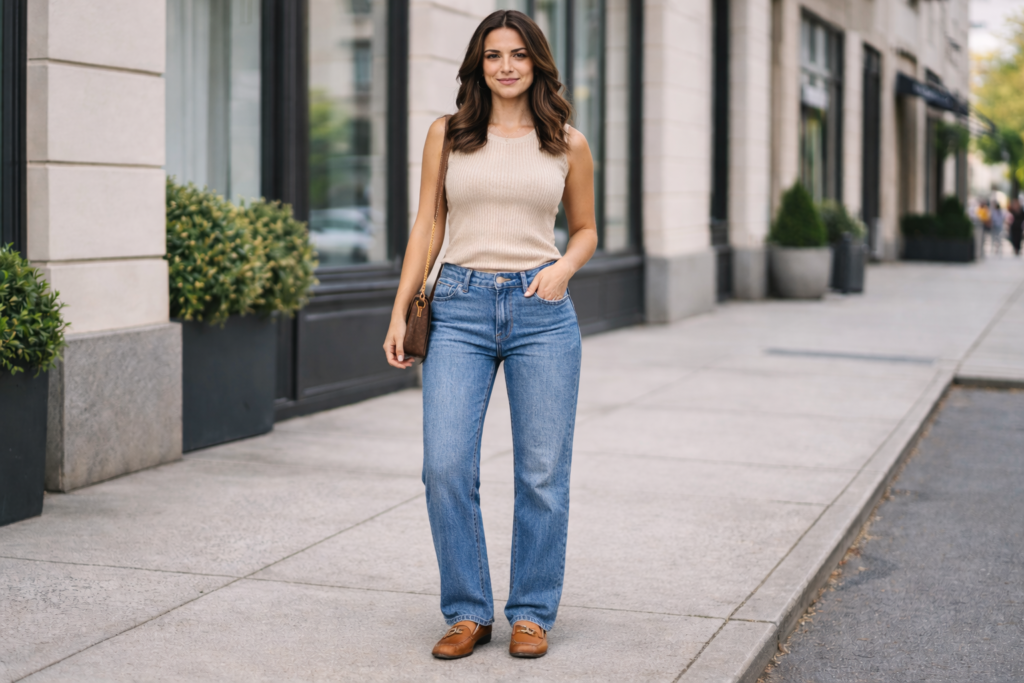
Rise measurement: 9–10 inches (22-26 cm)
Where they sit: Just below the belly button
Mid-rise jeans are the true “middle ground.” They offer balance – not too low, not too high.
Aesthetic:
Timeless, wearable, versatile.
This rise is one of the most universally flattering options and works across almost all aesthetics:
Who They Flatter:
- Most body types
- Those wanting comfort without full high-waist structure
If you’re unsure where to start, mid-rise is the safest choice.
Styling Tips:
- Tuck in a fitted tee or blouse to subtly define the waist without exaggerating proportions
- Layer with a belt to add subtle shape and interest to simple outfits
- Stick to classic washes like mid-blue or dark denim for maximum versatility
- Balance proportions by avoiding overly long tops that cover the waistband completely
I love the comfort and versatility of mid-rise jeans. They’re ideal for everyday wear – easy to sit in and offer moderate stomach coverage without feeling restrictive. Unlike low or ultra low-rise styles, mid-rise jeans make it effortless to tuck in tops, which means they transition seamlessly from day to night and across different occasions.
4. High-Rise Jeans

Rise measurement: 10–12 inches (25-31 cm)
Where they sit: At or slightly above the belly button
High-rise jeans define the waistline and create the illusion of longer legs.
Aesthetic:
Polished, elongating, flattering.
High-rise styles are extremely popular in capsule wardrobes because they:
- Visually lengthen the legs
- Emphasise the smallest part of the waist
- Smooth the lower stomach
- Pair well with tucked or cropped tops
Who They Flatter:
- Pear shapes
- Hourglass shapes
- Petite women (creates height illusion)
- Anyone wanting waist definition
High-rise jeans are considered the most versatile and widely flattering option.
Styling Tips:
- Choose straight-leg or wide-leg styles for a modern, flattering silhouette
- Tuck in a fitted top or blouse to highlight the waistline and enhance the elongating effect
- Keep layers shorter to avoid hiding the high-rise waist placement.
For the past few years, high-waisted jeans have taken up prime real estate in my wardrobe. I love the coverage and shape they offer – they define the waist beautifully while still feeling polished. They’re also incredibly easy to style for a casual office look: just add a tucked-in button-down and a cropped jacket. That said, after a particularly big lunch, the waistband can feel a little restrictive, so it’s worth paying attention to how they fit – especially when sitting down.
5. Super High-Rise (Ultra High-Waist) Jeans
Rise measurement: 12+ inches (31+ cm)
Where they sit: Well above the belly button
Super high-rise jeans lean vintage-inspired and structured.
Aesthetic:
70s revival, structured, statement silhouette.
Often found in:
- Flare jeans
- Vintage straight leg
- Corset-style waistbands
Who They Flatter:
- Long torsos
- Defined waistlines
- Those wanting dramatic leg elongation
Styling Tips:
- Pair with a cropped or waist-length top to balance the higher waistband
- Add a slim belt to emphasise the waist without adding bulk
- Wear with heeled boots or platforms to enhance the elongating effect
- Balance volume on the bottom with a more fitted or tailored top
Even more so than standard high-rise styles, ultra high-rise jeans – particularly in rigid denim – can feel quite restrictive when sitting. Because the waistband sits higher and tends to be more structured, there’s less give through the midsection. For added comfort, it’s worth looking for styles with a slight stretch blend, which maintain the sculpted silhouette while allowing for easier movement throughout the day.
Which Jean Rise Is Most Flattering?
There isn’t one universally “best” rise – it depends on your proportions and styling goals.
Choose Based On:
Short torso? Low or mid-rise can balance proportions.
Long torso? High or super high-rise helps define the waist.
Want tummy support? High-rise.
Going for Y2K aesthetic? Low-rise.
Building a capsule wardrobe? High or mid-rise are safest investments.
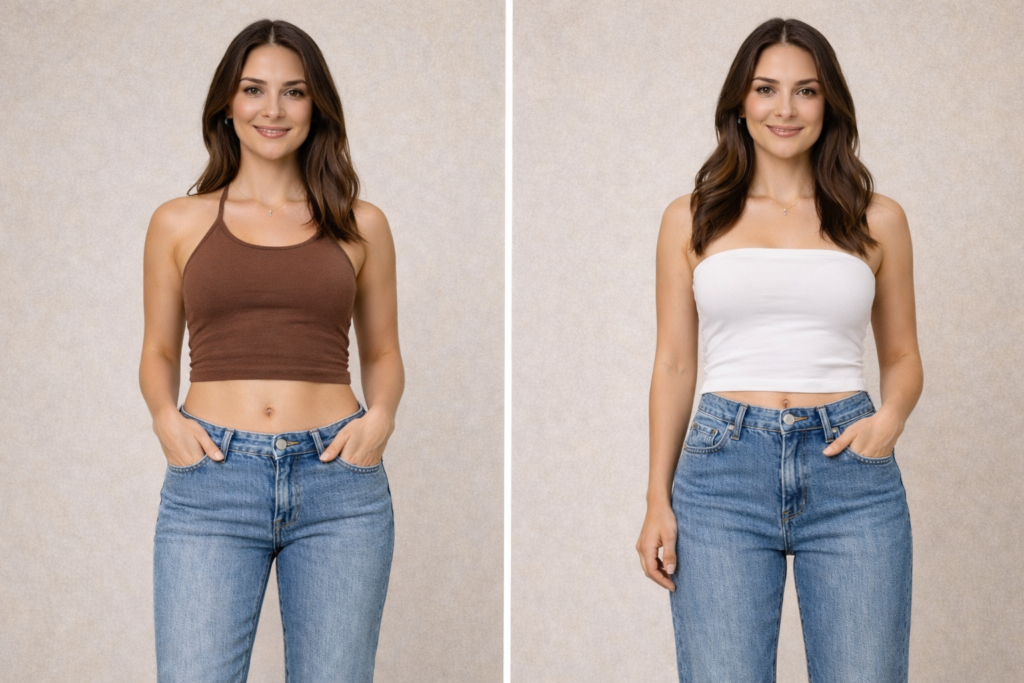
Here’s the Jean Rise Comparison Chart – a simple, at-a-glance guide to help you choose the rise that best suits your proportions and desired look:
| Rise Type | Waist Placement | Best For | Leg Effect | Trend Level |
| Ultra Low | Hips | Straight shapes | Shortens | Trend-driven |
| Low | Below navel | Short torsos | Slight shorten | Modern trend |
| Mid | Just below navel | Most body types | Balanced | Timeless |
| High | At navel | Pear/hourglass | Elongates | Classic staple |
| Super High | Above navel | Long torso | Strong elongation | Vintage |
Final Thoughts: Why Jean Rise Matters More Than You Think
Finding the right jean rise can completely transform how your outfits sit, how balanced your proportions appear, and ultimately how confident you feel wearing them. While it’s easy to focus on the visible details – skinny vs straight, flare vs wide-leg, light wash vs dark wash – the rise is just as important, if not more so.
Before choosing the cut or wash, consider where the waistband actually sits on your body. That placement affects comfort, proportions, and how often you’ll realistically reach for the pair.
Trends will always cycle through – from ultra low-rise revivals to ultra high-waisted silhouettes – and it can be fun to experiment. But denim is often an investment piece, and the most sustainable choice is the one you feel comfortable in and will wear repeatedly. When the rise aligns with your body and lifestyle, the rest of the outfit falls into place – and you avoid buying into trends that won’t stand the test of time in your wardrobe.


Leave a Reply