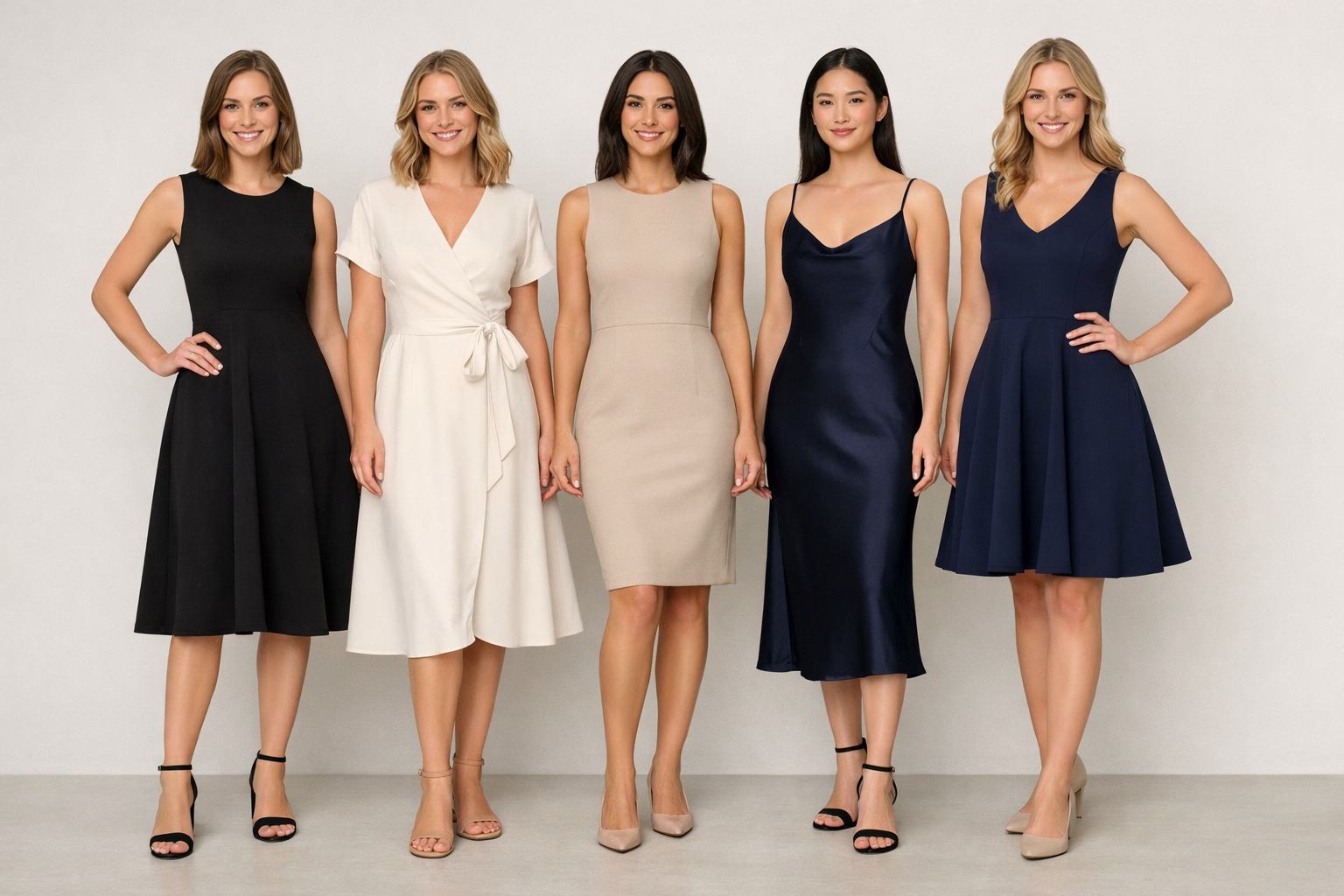
For most of my life, I’ve mentally sorted dresses into very simple categories: long or short, tight or loose. And if I’m being honest, my limited understanding of dress cuts and all the fashion terminology around them probably explains why there aren’t many dresses in my wardrobe.
But I’m keen to change that.
The more I think about it, the more I realise dresses might actually be one of the easiest pieces to wear. It’s just one item – add a pair of shoes, maybe a bag, and you’re out the door. No complicated outfit formulas required.
So I started wondering: maybe the issue isn’t dresses themselves, but simply not knowing which cuts work best for me – for my body shape, my lifestyle, and the settings I dress for most often (usually the office or running around during the day).
Because while colour, fabric, and trends often get the spotlight, the cut of a dress is what truly determines how it looks and feels when worn.
Two dresses might look almost identical on a hanger, yet feel completely different once you try them on – all because of their silhouette. Some shapes define the waist. Others skim the body. Some create movement and volume, while others keep things sleek and minimal.
Learning about the most common dress cuts feels like one of the easiest ways to shop smarter and build outfits that feel balanced, flattering, and comfortable.
And as it turns out, while fashion constantly introduces new variations, five classic dress silhouettes appear again and again in wardrobes, runways, and retail collections. These shapes have stood the test of time because they’re adaptable, versatile, and surprisingly easy to style.
So let’s take a closer look at the five most popular dress cuts every woman should know.
What Is a Dress Cut?
Before we start exploring the different silhouettes, it helps to pause for a moment and ask a simple question: what exactly is a dress cut?
When people talk about the cut of a dress, they’re referring to the overall shape or silhouette of the garment. That shape is created through tailoring, seams, and the way the fabric is constructed around the body.
It’s different from other design details you might notice when looking at a dress, such as:
- Necklines
- Sleeve styles
- Fabric choices
- Dress length
For example, two dresses might both have a square neckline and be made from satin. But if one flares gently from the waist and the other falls straight down the body, they’ll feel completely different when you actually try them on.
That difference comes down to the silhouette.
The cut of a dress can influence several important things at once, like –
Proportion
Some silhouettes emphasise the waist, while others create a longer, leaner line through the body.
Comfort and movement
Flowy shapes allow more movement, while structured cuts tend to feel more tailored and polished.
Overall style
A full, flared skirt often reads feminine and playful, while a straight silhouette usually feels sleek and modern.
Once you start recognising these shapes, shopping becomes a lot easier. Instead of trying on everything in sight, you can quickly identify the silhouettes that suit your body, your lifestyle, and the way you like to dress.
And that’s exactly what we’re about to explore.
The Top 5 Most Popular Dress Cuts
There are countless dress styles out there, but when you start paying attention to silhouettes, you’ll notice the same shapes appearing again and again.
These five dress cuts have remained popular for decades because they’re versatile, flattering, and easy to style – no matter what trends happen to be circulating.
Let’s take a closer look.
1. The A-Line Dress
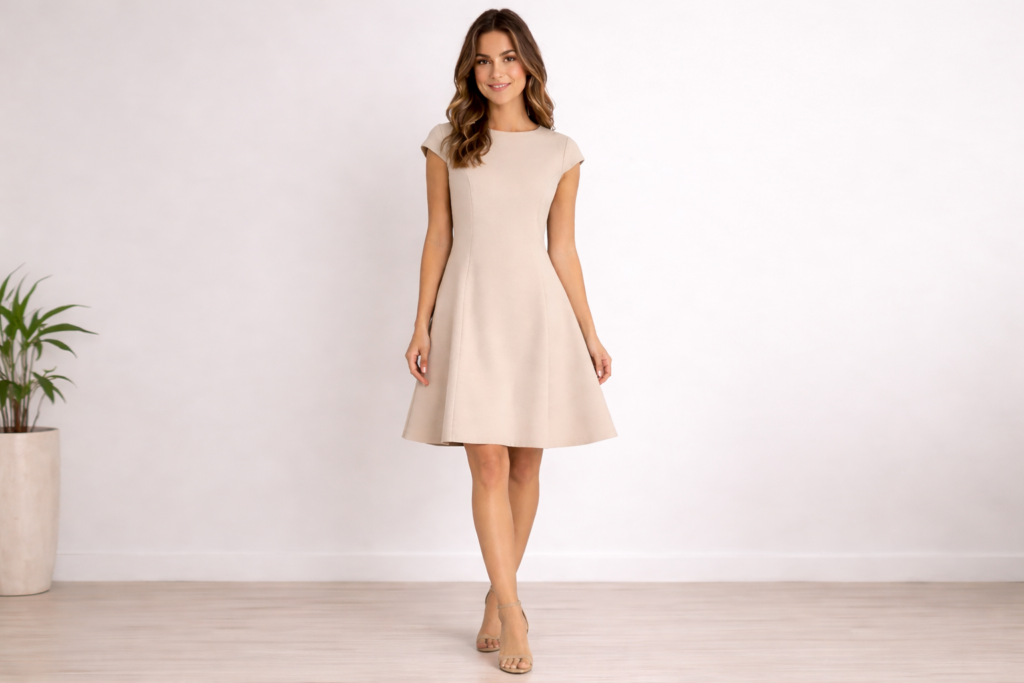
If there were an award for the most universally flattering dress silhouette, the A-line dress would probably win it.
As the name suggests, the shape resembles the letter “A”. The dress is fitted through the upper body and waist, then gradually widens toward the hem.
The result is a silhouette that gently defines the waist while allowing the skirt to skim over the hips. Because the flare is subtle rather than dramatic, the overall shape feels balanced and easy to wear.
One of the reasons A-line dresses remain so popular is their versatility. You’ll see them in everything from casual cotton minis to elegant midi dresses and structured evening styles.
This silhouette tends to work particularly well for:
- Pear-shaped figures
- Hourglass shapes
- Rectangle body types
For pear shapes, the gentle flare helps balance the hips. For straighter silhouettes, it can create the illusion of curves.
Styling an A-line dress is also refreshingly simple. A relaxed cotton version paired with sneakers works perfectly for daytime errands, while a structured midi with heels can feel polished enough for work or events.
It’s one of those silhouettes that can move easily between casual, workwear, and semi-formal settings.
2. The Wrap Dress
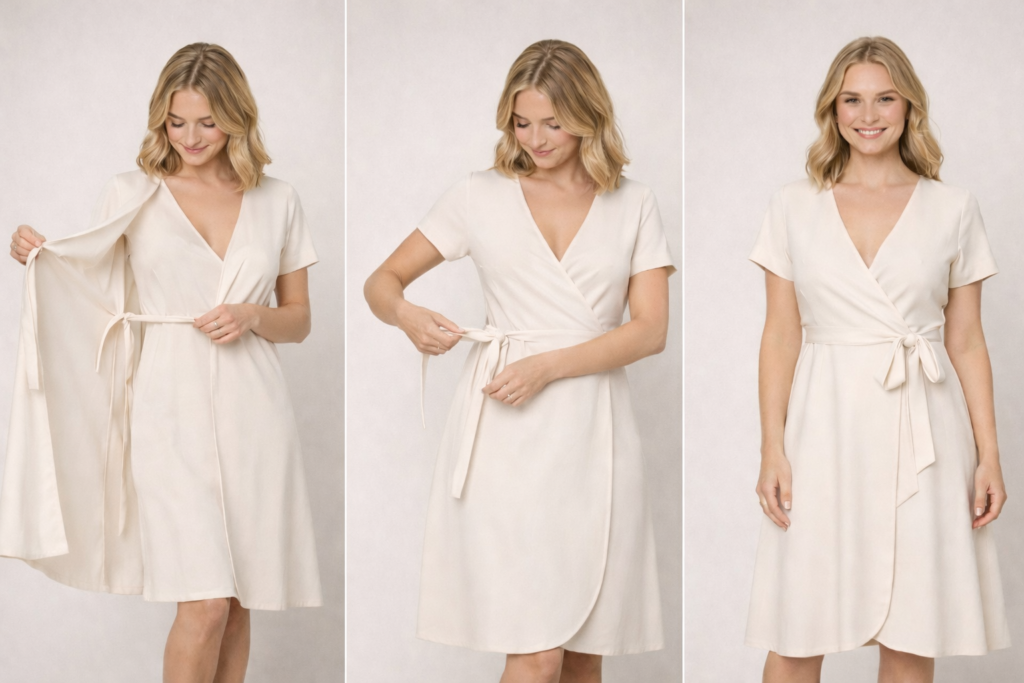
Few dresses have reached the same level of iconic status as the wrap dress.
First popularised in the 1970s, the wrap dress became famous for its adjustable fit and effortless elegance. Instead of relying on zippers or rigid tailoring, the fabric wraps across the body and ties at the waist.
This construction naturally creates a V-shaped neckline and defined waistline, which is a big part of what makes the silhouette so flattering.
Another reason the wrap dress has remained a wardrobe favourite is its flexibility. Because it ties at the waist, you can adjust the fit slightly depending on how you want it to sit.
The shape often works beautifully for:
- Hourglass figures
- Apple body types
- Fuller busts
- Rectangle shapes looking to create curves
When it comes to styling, the wrap dress is incredibly adaptable. A printed wrap dress paired with sandals feels perfect for warm summer days, while a darker long-sleeve version can transition easily into office wear.
It’s one of those rare pieces that manages to feel both comfortable and polished at the same time.
3. The Sheath Dress
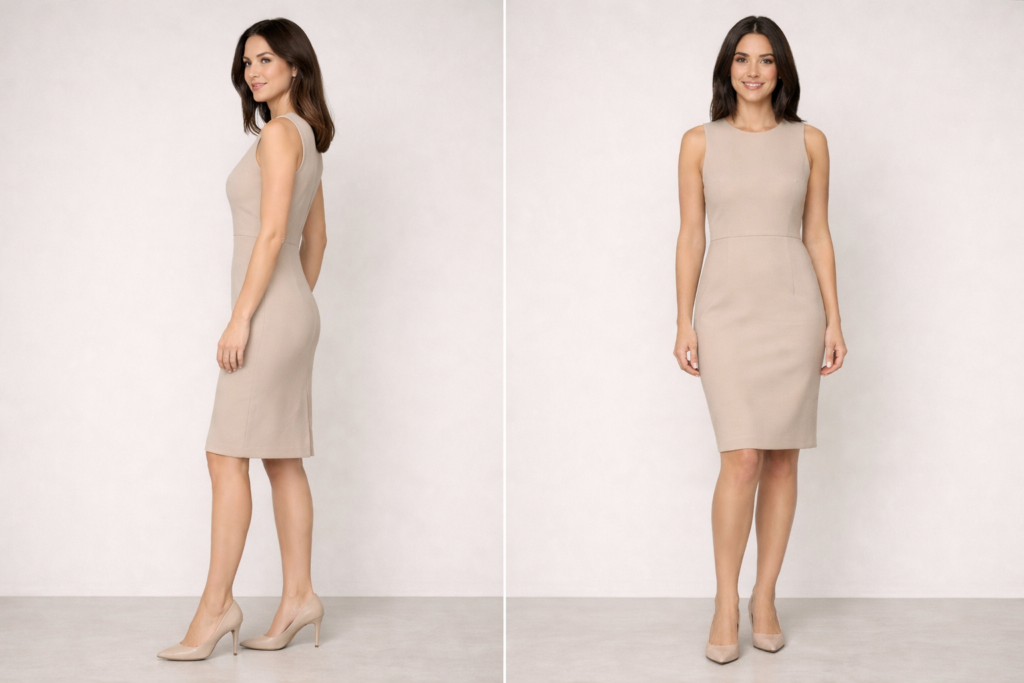
If the A-line dress feels soft and flowing, the sheath dress sits at the opposite end of the spectrum.
This silhouette follows a straight, streamlined shape that skims the body without flaring outward at the skirt.
The result is a look that feels tailored, refined, and quietly sophisticated.
Sheath dresses became especially popular in professional wardrobes because of their clean lines and understated elegance. They often give the impression of being polished and put-together without requiring much styling effort.
Unlike silhouettes that rely on volume or movement, the sheath dress focuses on simplicity and precision.
Because of its straight shape, it tends to work particularly well for:
- Athletic builds
- Rectangle body types
- Petite frames
The clean silhouette can create a longer, more elongated visual line, which often feels sleek and modern.
You’ll frequently see sheath dresses styled with:
- Blazers
- Classic pumps
- Structured handbags
Together, these elements create an outfit that feels professional without being overly complicated.
And although the sheath dress is often associated with office wear, it can easily transition into evening settings when paired with statement jewellery and heels.
4. The Slip Dress
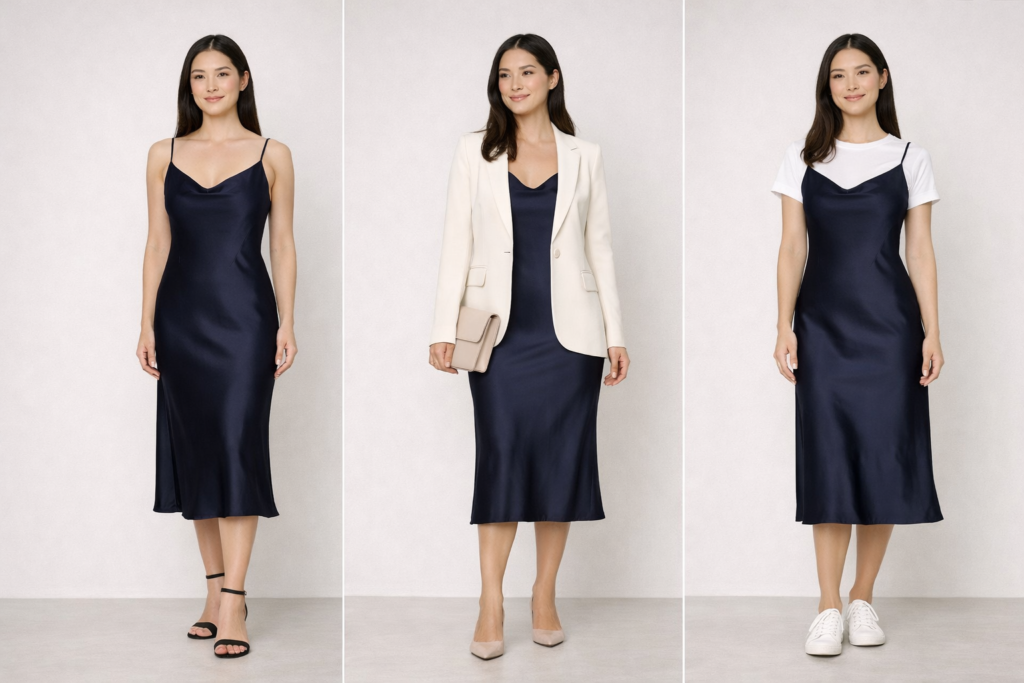
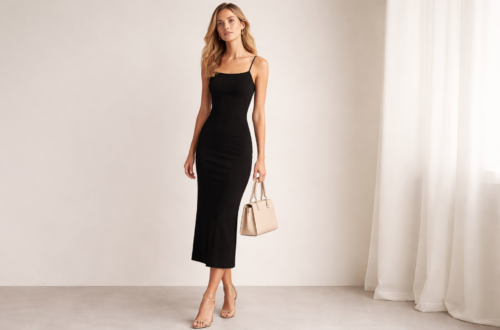
Few silhouettes capture effortless minimalism quite like the slip dress.
Inspired by vintage lingerie, the slip dress rose to popularity in the 1990s and quickly became synonymous with understated elegance.
Its defining features are beautifully simple:
- Thin straps
- Minimal seams
- Soft fabric that drapes gently over the body
Rather than relying on heavy tailoring, the slip dress allows the fabric itself to create movement and shape.
And that simplicity is exactly what makes the silhouette so appealing.
Slip dresses often work particularly well for:
- Petite frames
- Rectangle silhouettes
- Athletic builds
That said, the final look of a slip dress often depends heavily on how it’s styled.
A silk slip dress paired with heels can feel refined and evening-ready. Layer the same dress over a fitted T-shirt, and suddenly it becomes a relaxed daytime outfit.
Many people also pair slip dresses with oversized blazers or knitwear, which adds contrast and depth to the otherwise minimal silhouette.
The beauty of the slip dress lies in its adaptability – it can feel both relaxed and elevated depending on how you wear it.
5. The Fit-and-Flare Dress
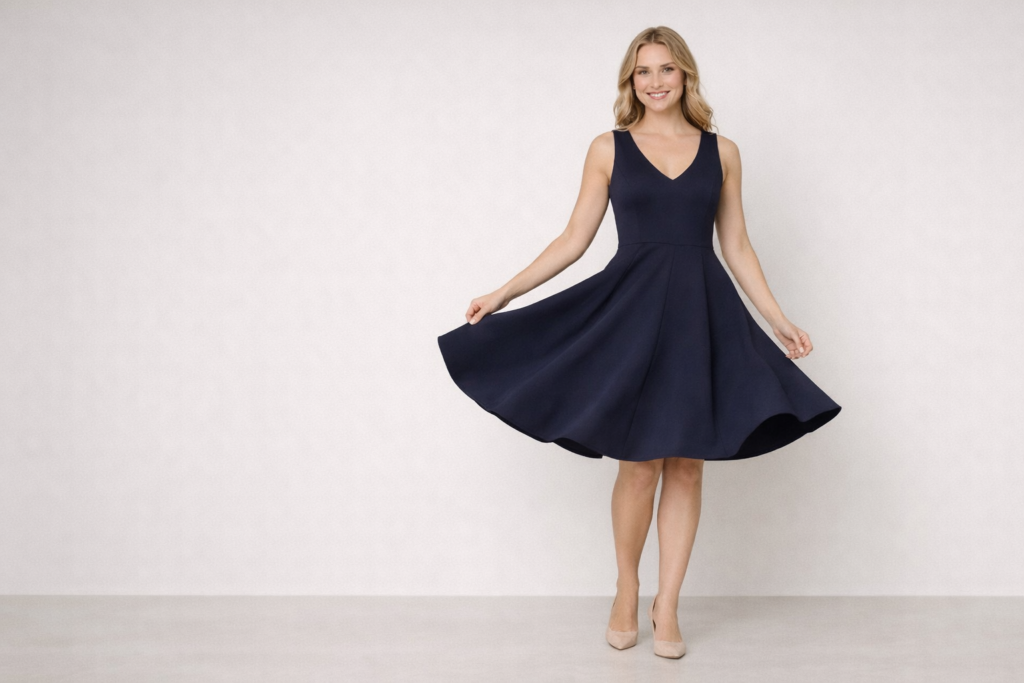
The fit-and-flare dress is one of the most recognisable dress silhouettes in fashion.
This style features a fitted bodice paired with a fuller skirt that flares outward from the waist.
While it shares some similarities with the A-line silhouette, the key difference lies in the volume of the skirt. Fit-and-flare dresses usually create a more dramatic flare and a more defined waist.
The result is a silhouette that feels feminine, playful, and full of movement.
Fit-and-flare dresses tend to work especially well for:
- Hourglass shapes
- Pear shapes
- Rectangle body types
By highlighting the waist and adding volume through the skirt, the silhouette naturally creates balanced proportions.
That’s why fit-and-flare dresses are so often chosen for weddings, cocktail events, and special occasions.
That said, modern versions also appear in casual fabrics like cotton or jersey, making them much easier to wear day-to-day.
Pair a relaxed fit-and-flare dress with flats or sneakers, and the entire look instantly feels more laid-back.
How to Choose the Right Dress Cut
Once you start noticing dress silhouettes, it’s easy to feel like there are suddenly too many options.
But the good news is that there’s no single “correct” dress cut. The right silhouette usually comes down to a combination of comfort, occasion, and personal style.
When choosing a dress, it can help to think about a few key things.
Body proportions
Some dress cuts highlight the waist, while others create longer lines or balance wider hips.
Trying different silhouettes can help you discover which shapes feel most natural on your body.
Comfort and movement
Flowy silhouettes allow more movement, while structured dresses may feel more tailored.
Think about how you’ll actually be wearing the dress throughout the day.
Occasion
A relaxed A-line dress might be perfect for weekend errands, while a sheath or wrap dress may feel more appropriate for professional settings.
Personal style
Ultimately, the best dress silhouette is the one that feels most like you.
Some people gravitate toward clean, minimalist shapes, while others prefer softer silhouettes with more movement.
Neither approach is better – it simply depends on what fits naturally into your wardrobe.
Final Thoughts
Fashion trends may come and go, but certain silhouettes remain popular for a reason.
The A-line dress, wrap dress, sheath dress, slip dress, and fit-and-flare dress have all earned their place in wardrobes because they offer something we’re all looking for: versatility, flattering proportions, and timeless appeal.
And honestly, I’m glad we went on this little learning journey together. Understanding these core dress cuts makes navigating fashion feel a lot less overwhelming – and a lot more intentional.
The next time you’re browsing dresses online or in-store, try looking at the silhouette first. Once you start recognising these shapes, you’ll notice them everywhere.
And once you figure out which cuts work best for you, shopping becomes far less about guesswork – and much more about choosing pieces you’ll genuinely love wearing.
Which, if you ask me, makes the idea of adding a few more dresses to the wardrobe feel a lot more appealing.
Leave a Reply