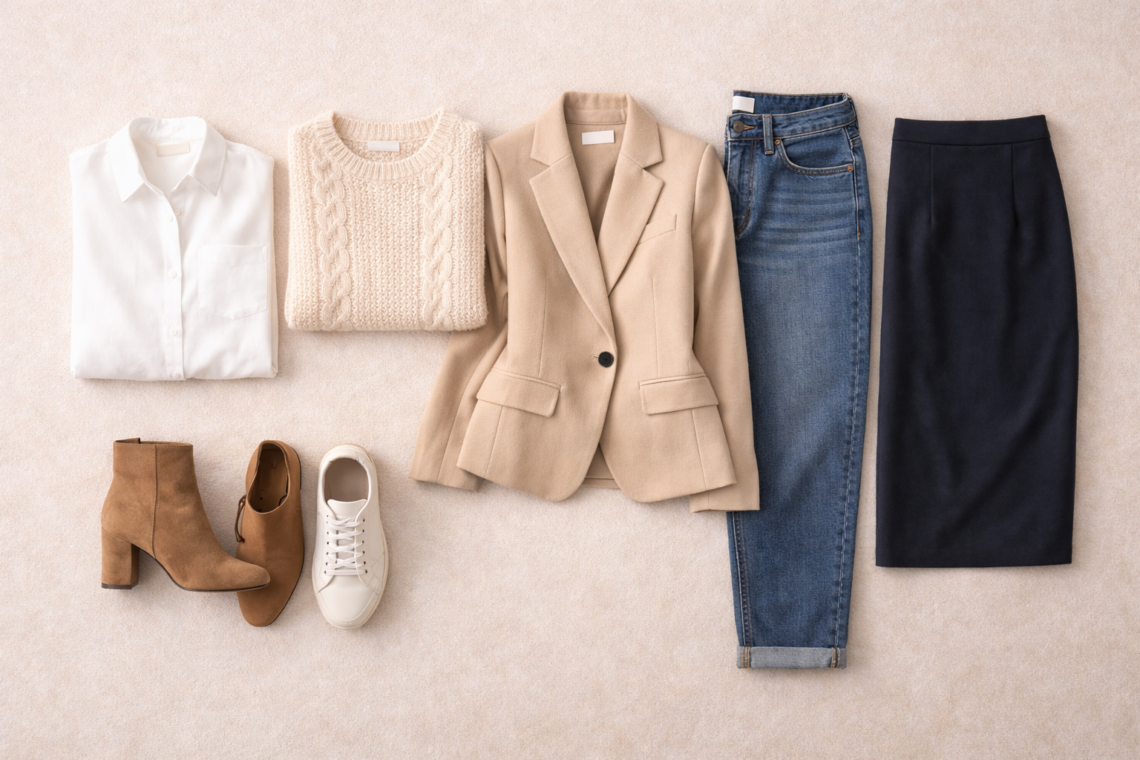
If you’ve ever opened your wardrobe and thought, “Why do I have so many clothes but still nothing to wear?” – you’re definitely not alone. I’ve found myself asking that exact question more times than I can count.
Over time, wardrobes tend to fill up with pieces that seemed like a great idea at the time, but don’t necessarily work with the rest of what we already own. A top that only pairs with one pair of pants. A skirt that requires very specific shoes. A dress that somehow never makes it out of the wardrobe.
Which is exactly why I’ve become increasingly curious about something I keep seeing on my socials- capsule wardrobes.
Capsule wardrobes have been recommended as a way to simplify your wardrobe, declutter your closet, and create more outfits with fewer clothes. The idea is surprisingly appealing.- especially when I think about creating an office workwear capsule wardrobe and possibly even experimenting with seasonal capsule wardrobes.
Not because I want to completely overhaul my wardrobe overnight (that would be wildly impractical and expensive), but because learning how capsule wardrobes work might help me better understand:
- which pieces I actually wear all the time,
- which items in my wardrobe work well together, and
- which pieces might quietly be ready to move on.
So if you’re curious about capsule wardrobes too, let’s break it down together.
What Is a Capsule Wardrobe?
A capsule wardrobe is a small, curated collection of versatile clothing pieces that can be mixed and matched to create many outfits.
Instead of owning dozens of disconnected items, a capsule wardrobe focuses on:
- timeless basics,
- cohesive colours,
- versatile silhouettes, and
- high outfit repeatability.
Most capsule wardrobes contain roughly 25 to 40 pieces, that include:
- tops,
- bottoms,
- dresses,
- outerwear, and
- shoes.
The key idea is that every item works with several others, which means you can create many outfits from a relatively small number of pieces.
Background: Where the Capsule Wardrobe Idea Came From
The concept of the capsule wardrobe was popularised in the 1970s by London boutique owner Susie Faux, who believed wardrobes should consist of a limited number of essential pieces that never go out of style.
Her philosophy was simple: if your wardrobe is built around well-chosen essentials, getting dressed becomes much easier.
The idea gained even more attention in the 1980s when designer Donna Karan introduced her famous “Seven Easy Pieces” collection. The concept showed how a small group of garments could be styled in multiple ways to create many outfits.
Today, capsule wardrobes are widely embraced as a way to:
- simplify daily dressing,
- reduce unnecessary shopping,
- develop a clearer personal style, and
- declutter wardrobes that have grown over time.
And honestly, that’s exactly why the idea has caught my attention.
Why I’m Interested in Trying a Capsule Wardrobe
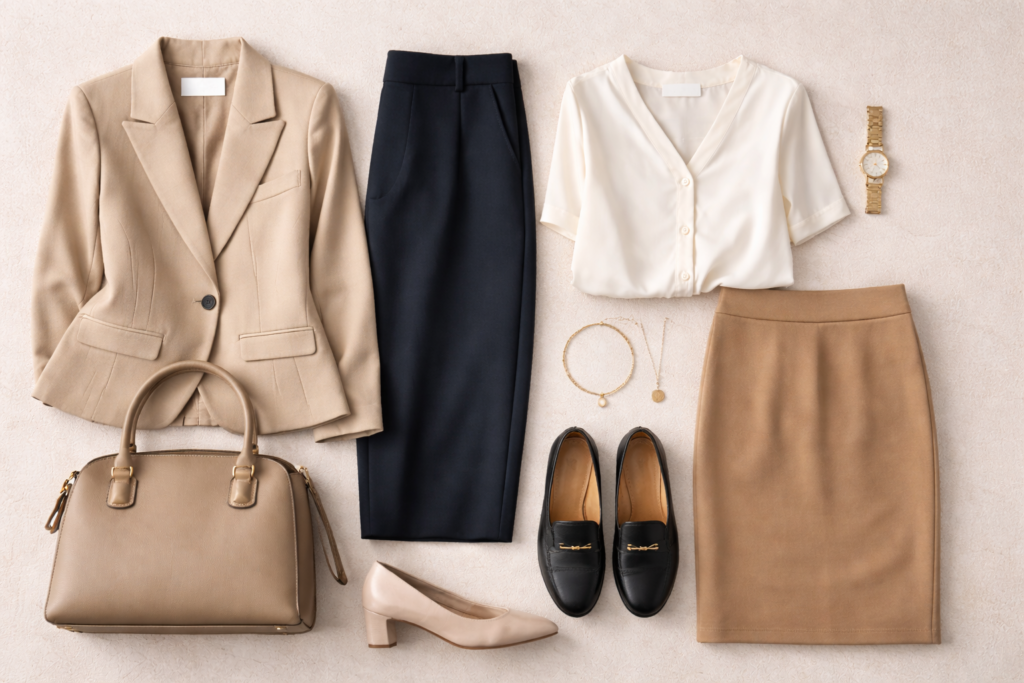
The idea of completely revamping my wardrobe feels… a little terrifying.
Realistically, most of us can’t just throw out everything we own and start fresh with a perfectly curated capsule wardrobe. It would simply be too expensive, impractical, and a bit like diving into uncharted waters.
What if it doesn’t work?
What if the pieces don’t suit my lifestyle?
What if I suddenly regret letting go of things?
So instead of thinking about capsule wardrobes as a full reset, I’m approaching the idea more as a learning process.
What I’m especially curious about is experimenting with two specific types of capsules- corporate workwear capsule and seasonal capsule wardrobes.
The idea of having a streamlined work wardrobe- where everything pairs easily and getting dressed for the office takes only a few minutes, sounds incredibly appealing.
And seasonal capsules could be a great way to refresh my wardrobe throughout the year without constantly buying new clothes.
Most importantly, learning how capsule wardrobes work might help me figure out:
- what truly works in my wardrobe,
- what I wear repeatedly, and
- what pieces might simply be taking up space.
Because sometimes the problem isn’t that we need more clothes, we just need a wardrobe that works better.
The Core Idea Behind Capsule Wardrobes
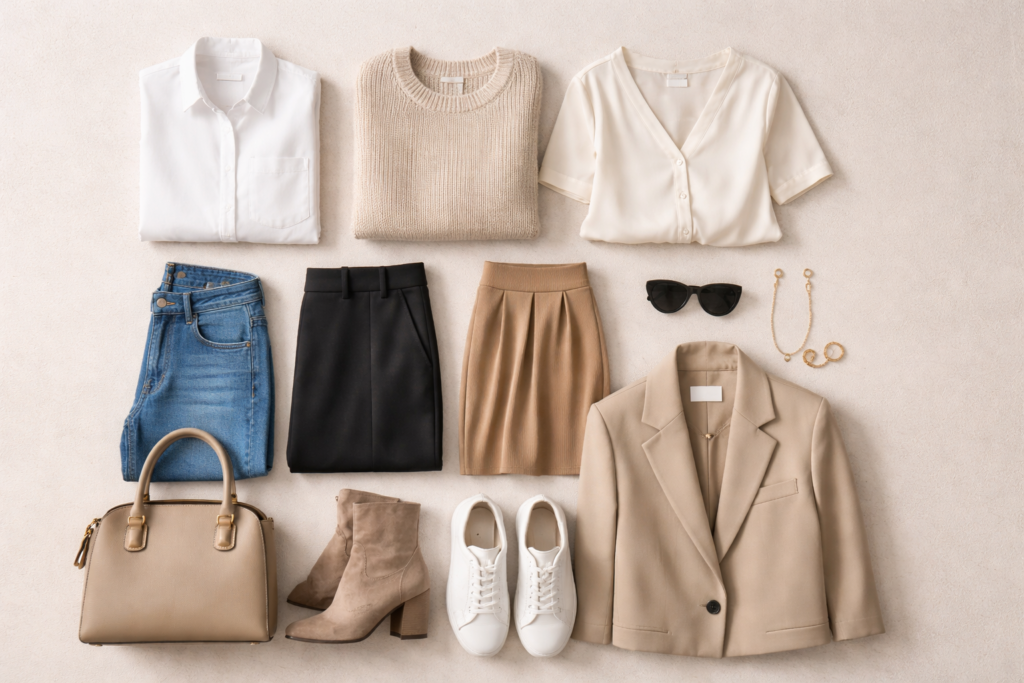
At the heart of every capsule wardrobe is one simple concept: interchangeability.
Every item should be able to pair with several other pieces in your wardrobe.
When clothing pieces coordinate naturally, the number of outfit combinations increases dramatically, which means fewer clothes but more outfit possibilities.
It seems counterintuitive, but surprisingly logical when you deep it.
5 Simple Capsule Wardrobe Formulas
If you’re curious about building a capsule wardrobe, these formulas can be a helpful starting point.
Think of them less as strict rules and more as guidelines that help create balance and versatility.
1. The 5–4–3–2–1 Capsule Formula
One of the most popular capsule wardrobe frameworks is the 5–4–3–2–1 formula.
It includes:
- 5 tops,
- 4 bottoms,
- 3 pairs of shoes,
- 2 jackets or layering pieces, and
- 1 dress.
This structure creates a wardrobe where nearly every piece pairs easily with several others.
Even with this relatively small group of items, you can still create dozens of outfit combinations.
2. The Three-Colour Capsule Palette
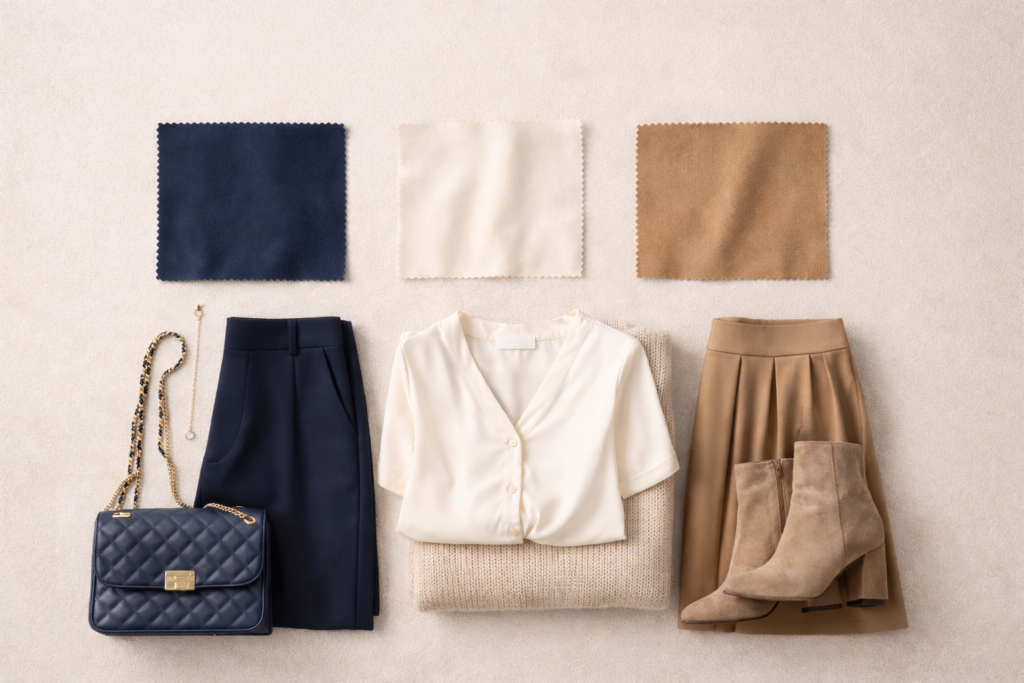
Colour coordination is one of the easiest ways to make a capsule wardrobe work.
The three-colour palette formula suggests choosing:
- one base neutral (black, navy, grey),
- one light neutral (white, cream, beige), and
- one accent colour.
For example:
- navy,
- cream, and
- camel.
Or:
- black,
- white, and
- olive.
When most pieces in your wardrobe sit within a small colour palette, mixing and matching becomes much easier.
3. The Outfit Multiplier Rule
Another helpful guideline is the Outfit Multiplier Rule.
The idea is simple: every item should work with at least three other pieces in your wardrobe.
For example, a blazer might pair with:
- jeans,
- trousers, and
- dress.
A knit sweater might work with:
- denim,
- skirts, and
- tailored pants.
This dramatically increases outfit combinations without increasing the size of your wardrobe. I think this is such a helpful mindset to have when decluttering your wardrobe and making more thoughtful purchases going forward.
4. The Five Basics to One Statement Rule
Capsule wardrobes work best when they lean toward timeless foundational pieces.
A helpful balance is: five basics for every one statement piece.
Example basics:
- white shirt,
- black trousers,
- blue jeans,
- neutral knit sweater, and
- simple dress.
Statement pieces might include:
- a printed skirt,
- colourful jacket, and
- patterned blouse.
This keeps the wardrobe cohesive while still allowing personality and variety.
5. The Seasonal Capsule Wardrobe
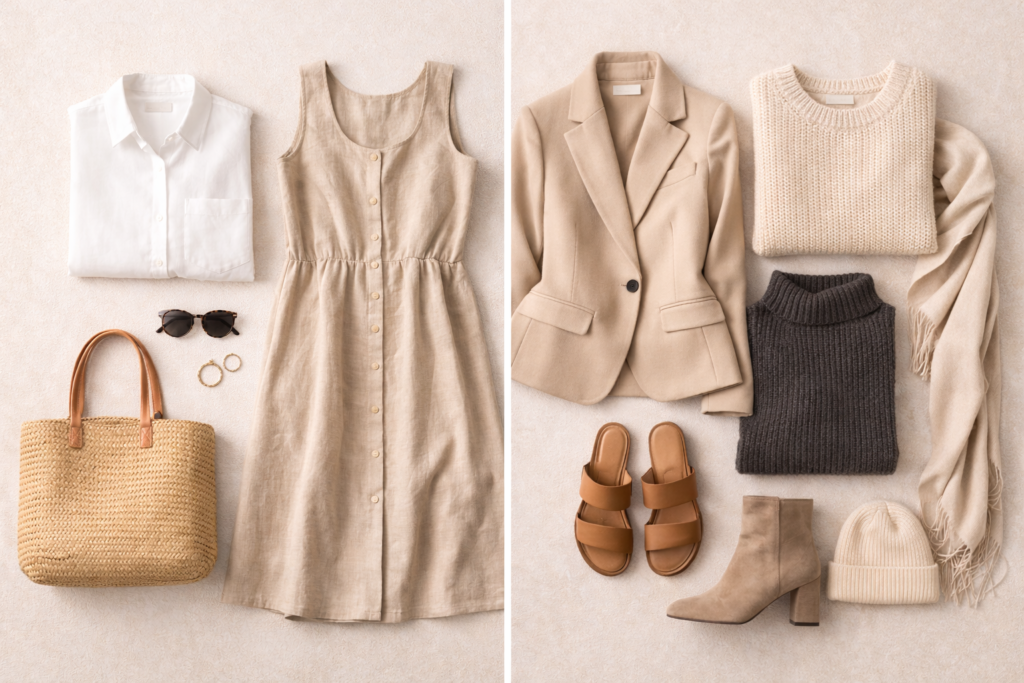
Another approach is creating seasonal capsule wardrobes.
Instead of one fixed capsule, wardrobes rotate slightly throughout the year.
A typical seasonal capsule might include:
- 6 tops,
- 4 bottoms,
- 2 dresses,
- 2 layering pieces, and
- 3 pairs of shoes.
For example, a summer capsule wardrobe might focus on:
- linen tops,
- lightweight dresses, and
- sandals.
A winter capsule wardrobe might include:
- knit sweaters,
- coats,
- boots, and
- layering pieces.
This approach keeps wardrobes fresh while still maintaining structure.
Why Capsule Wardrobes Work So Well
Capsule wardrobes have become popular because they solve several common wardrobe frustrations.
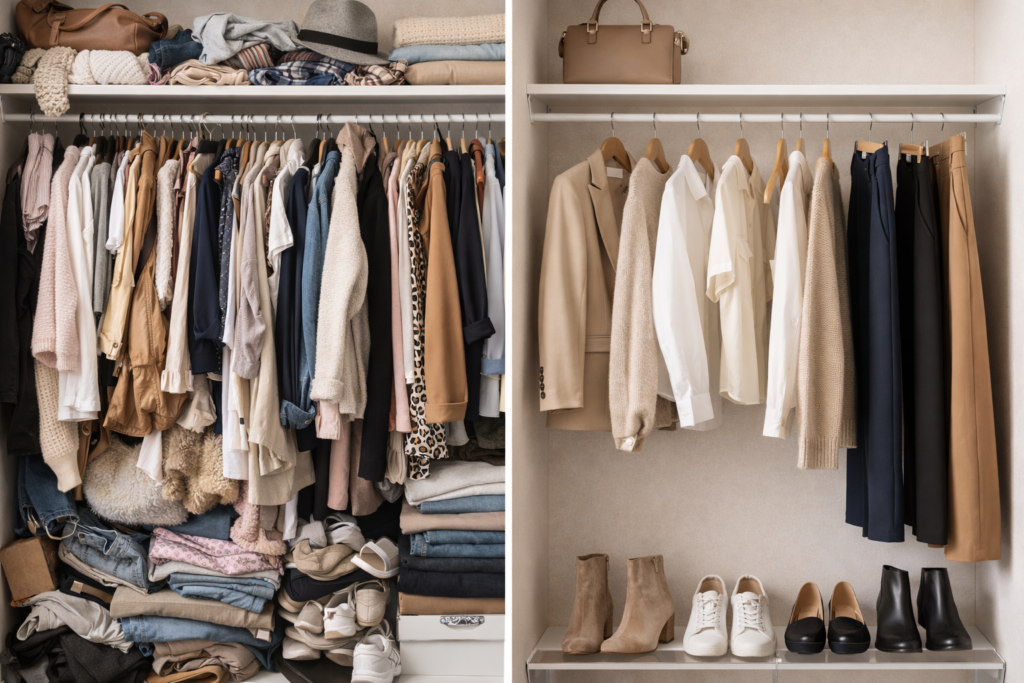
They simplify getting dressed
When most pieces already coordinate, outfits come together quickly.
They encourage more intentional shopping
Instead of buying random items, you begin asking:
- Does this match my colour palette?
- Can I wear this with several pieces I already own?
They help clarify personal style
When unnecessary pieces are removed, patterns start to emerge.
You might notice that you gravitate toward:
- structured tailoring,
- relaxed minimalism,
- classic silhouettes, and
- neutral colour palettes.
The Takeaway
A capsule wardrobe isn’t about strict minimalism or limiting your style.
It’s about intentional curation.
Personally, I’m intrigued by the idea of learning how capsule wardrobes work- not to completely overhaul my wardrobe overnight, but to better understand it.
If exploring capsule wardrobes helps me:
- declutter pieces I rarely wear,
- build a smarter corporate work wardrobe, and
- experiment with seasonal capsules.
Then it might just make getting dressed every day a little easier.
And if nothing else, the process might finally answer the question many of us secretly have when staring into our closets:
Do I really need more clothes… or do I just need a wardrobe that works better?



Leave a Reply