Quick Answer
Colour blocking is a fashion styling technique that combines two or more solid colours in bold, clearly separated sections within an outfit. Instead of blending colours subtly, the contrast between colours becomes the main visual feature. The result is a look that feels graphic, modern, and intentionally styled.
A Closer Look
Colour blocking appears everywhere from runway collections to everyday street style. The idea is simple: build an outfit using pieces that create distinct sections of colour rather than prints or blended tones.
For example:
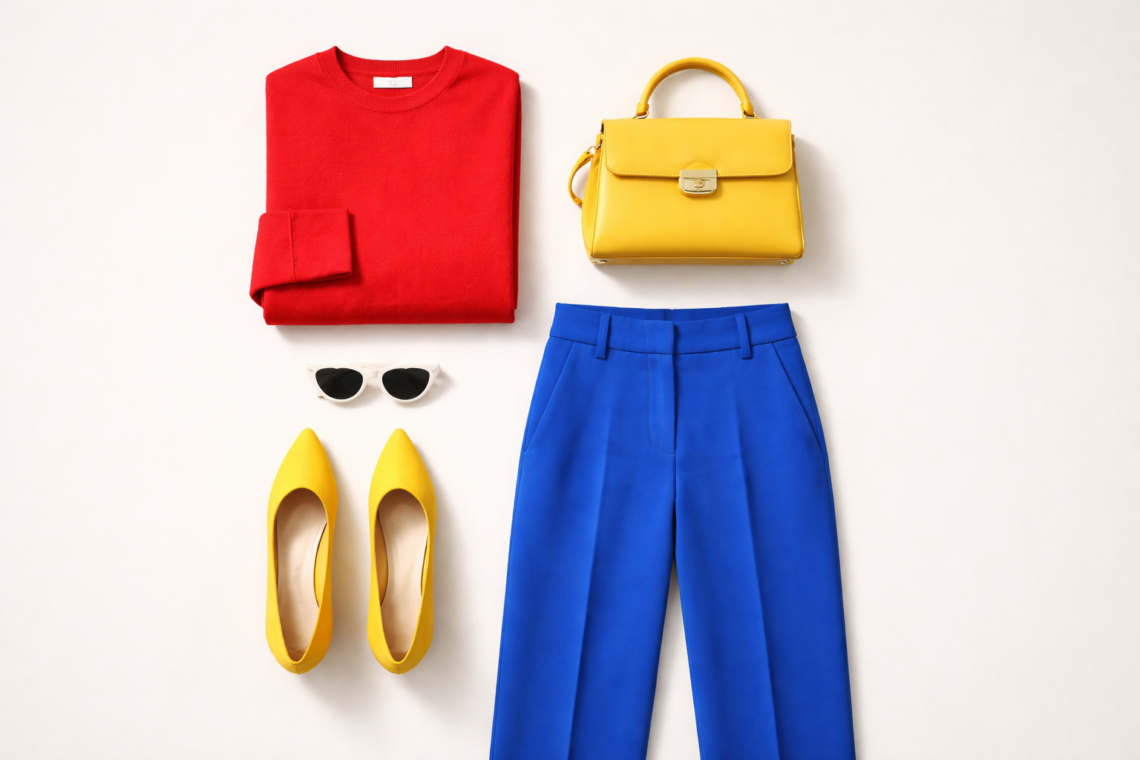
- A red sweater with blue trouser
- A green top with yellow pants
- A pink blazer with an orange skirt
Because each colour appears in a large, uninterrupted area, the outfit feels bold but still structured.
Colour blocking works particularly well because it:
- Creates visual clarity and structure,
- Makes colours appear more vibrant,
- Highlights silhouette and proportions, and
- Instantly adds personality to simple outfits.
Even a very basic outfit can look more styled when strong colour contrasts are introduced.
5 Foolproof Colour-Blocking Formulas
If you want to try colour blocking without overthinking it, these combinations almost always work.
1. The Two-Colour Contrast
Choose two bold colours and let them anchor the outfit.
Example:
Cobalt blue trousers + red sweater
This is the simplest and most classic colour-blocking approach.
2. The Neutral Anchor
Pair one bright colour with a neutral to keep the look balanced.
Example:
Beige trousers + bright green knit
The neutral helps the bold colour stand out without feeling overwhelming.
3. The Colour Sandwich
Repeat the same colour at the top and bottom of an outfit with a different colour in the middle.
Example:
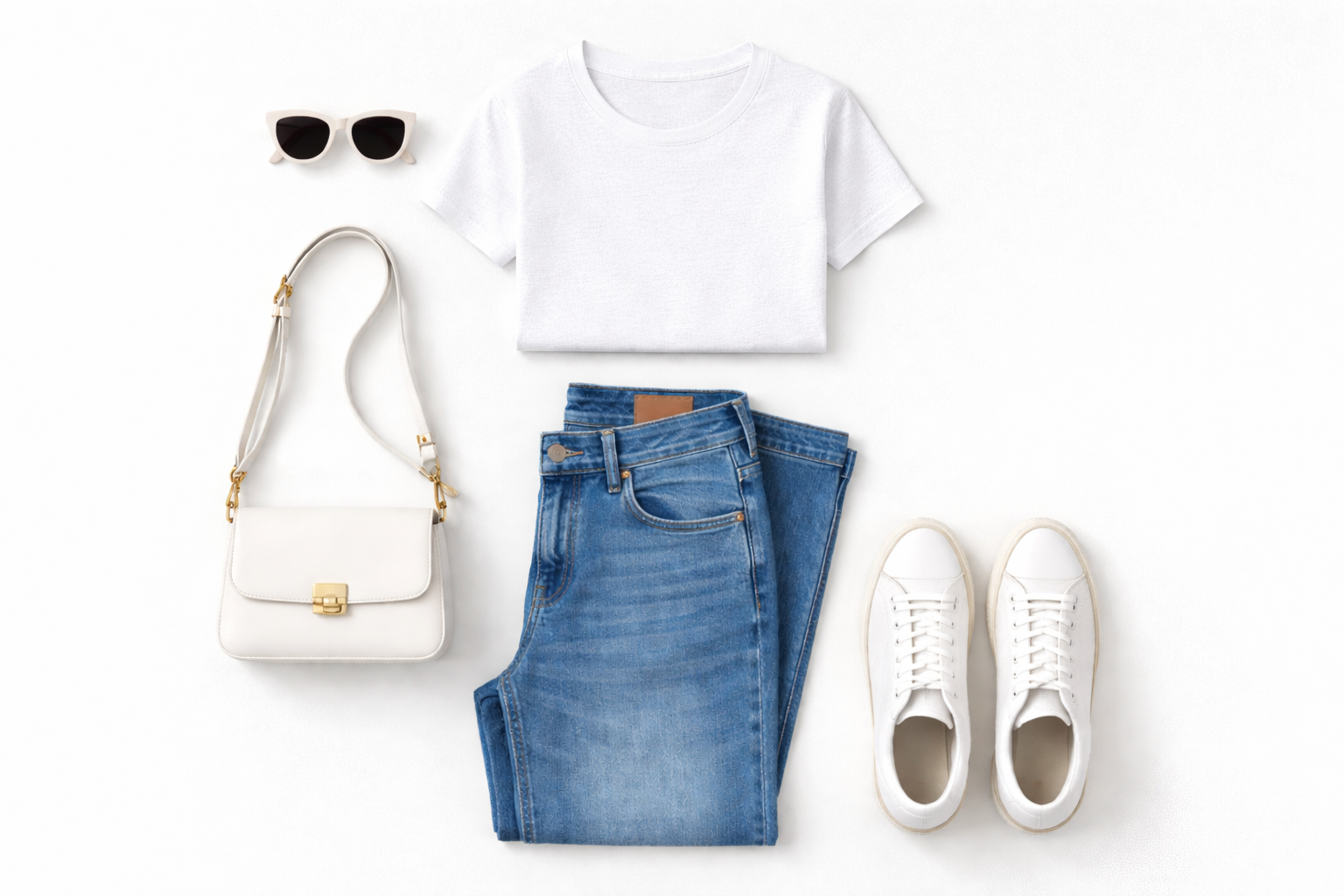
White blazer + blue jeans + white sneakers
This technique creates a structured, intentional look.
4. The Complementary Colour Pair
Rather than simply picking two bold colours, choose shades that sit opposite each other on the colour wheel for a more striking contrast.
Examples include:
- Blue + orange
- Purple + yellow
- Red + green
These combinations naturally create strong contrast.
5. The Monochrome Block
Use different shades of the same colour family.
Example:
Light blue shirt + navy trousers
This creates a softer version of colour blocking that still feels polished.

Leave a Reply